Clarendon Scholarship 2027–2028 for Pakistani Students: Application Guide
By Site Admin · Oct 15, 2026 · 32 min read
Research status: Clarendon Fund Scholarships — United Kingdom
Pakistani eligibility is confirmed. The University of Oxford states that Clarendon has no restrictions based on nationality or country of ordinary residence, and that eligible applicants to new Master’s and DPhil courses are considered automatically when they apply by the relevant course funding deadline.
Important deadline limitation: Clarendon does not have one universal scholarship deadline. Applicants must meet the December or January deadline attached to their chosen Oxford graduate course. As of 15 October 2026, the official Clarendon guidance does not provide one exact date applicable to every course for 2027–2028 entry. Do not enter a guessed universal date in the database. The course-specific deadline must be verified on the official Oxford course page before publishing.
Oxford University
PART 1 — Scholarship listing
Tab 1: Basics
Field | Value |
|---|---|
Title | Clarendon Fund Scholarship 2027–2028 in the United Kingdom |
Slug |
|
Country | United Kingdom |
Provider | University of Oxford |
Funding type | Fully funded |
Funding percentage | 100 |
Levels | Masters, PhD |
Fields | All eligible graduate subject areas |
Status | Draft |
Is featured | Yes |
Is editor's pick | Yes |
Eligibility Pakistan | Yes |
Academic year | 2027–2028 |
Deadline | Course-specific; verify manually on the official Oxford course page |
Application opens | Course-specific; verify manually |
Editorial warning: Do not publish a single fixed deadline for all Clarendon applicants. Oxford uses the December or January funding deadline for the individual graduate course. The 2027–2028 cycle is the target cycle for this listing, but the precise deadline must be recorded separately for the course the applicant chooses.
Oxford University
Tab 2: Coverage & amounts
Field | Value |
|---|---|
Stipend amount | Varies by award terms and study mode; full-time awards provide an annual living grant |
Stipend currency | GBP |
Duration value | Course-specific |
Duration unit | Years |
Tuition covered | Yes |
Travel covered | No universal travel allowance confirmed; verify award letter |
Insurance covered | Not confirmed as a separate universal benefit |
Accommodation covered | No separate accommodation payment universally specified |
Living allowance covered | Yes |
Deadline note | Apply for an eligible Oxford Master’s or DPhil course by its relevant December or January funding deadline. No separate Clarendon application is required. |
Oxford’s current Clarendon information lists a minimum annual living grant of £20,780 GBP for full-time scholars in 2025–2026. This is a historical published figure, not a confirmed amount for 2027–2028. Update the amount when Oxford publishes the applicable rate for the relevant cohort. Part-time scholars receive a study-support grant whose value varies by course and award conditions.
Oxford University
Tab 3: Eligibility details
Field | Value |
|---|---|
Min age | Leave blank; no universal minimum age published for Clarendon |
Max age | Leave blank; no universal maximum age published for Clarendon |
Min GPA | Leave blank; no universal numerical GPA threshold published |
IELTS required | Leave blank; Oxford course-specific English-language rules apply |
TOEFL required | Leave blank; Oxford course-specific English-language rules apply |
Work experience years | Leave blank; no universal work-experience requirement |
Tab 4: Content fields
Overview
The Clarendon Fund is a graduate scholarship programme at the University of Oxford in the United Kingdom. It supports academically strong applicants undertaking eligible Master’s and DPhil programmes across Oxford’s academic divisions. The scheme is open to applicants of all nationalities, including Pakistani citizens, and does not impose a universal restriction based on nationality, ordinary residence or subject area. Funding covers course fees and, for full-time scholars, includes a grant towards living expenses. Selection is competitive and considers academic achievement, potential and the quality of the candidate’s application.
For 2027–2028 entry, Pakistani applicants should first identify an eligible Oxford graduate course and check its official admissions deadline. Clarendon consideration is automatic when the graduate application is submitted by the relevant December or January funding deadline; there is no separate Clarendon scholarship form. There is no single deadline covering every course. Oxford has published a minimum annual living grant of £20,780 GBP for full-time scholars in 2025–2026, but that figure should not be treated as the confirmed rate for 2027–2028. Applicants must verify their course requirements, English-language conditions and funding details directly with Oxford.
Benefits
Full course-fee funding: Clarendon covers course fees for the period of fee liability specified for the scholar’s course. This applies to both Home and Overseas fee-status students.
Living grant for full-time scholars: Oxford’s published minimum was £20,780 GBP annually for 2025–2026. The 2027–2028 rate must be verified when confirmed.
Support for part-time study: Eligible part-time scholars receive a study-support grant. The amount depends on the course and individual funding arrangements.
Course-related duration: Awards are normally provided for the course’s fee-liability period. The award letter states the duration applicable to the scholar.
Wide subject coverage: The scheme considers eligible Master’s and DPhil applicants across Oxford’s academic subject areas.
International eligibility: There are no general nationality or ordinary-residence restrictions.
Scholar community: Award holders can join the Clarendon scholar community and related academic and social activities.
Total value: Do not enter a universal total package value. Tuition varies by course, and the applicable living grant and duration depend on the award. Calculate an individual estimate only after verifying the relevant course fees, funding rate and award period.
Eligibility
Basic requirements
You must apply to begin a new eligible Master’s or DPhil course at the University of Oxford.
Pakistani citizens are eligible to be considered because Clarendon does not restrict eligibility by nationality or ordinary residence.
You must submit your graduate application by the relevant December or January funding deadline for your chosen course.
You do not need to submit a separate Clarendon scholarship application.
Applicants holding deferred graduate offers are not eligible for Clarendon consideration under the published general rules.
Current Oxford students continuing on the same degree are not eligible to receive a new Clarendon award for that continuing course.
Academic requirements
Clarendon selection places substantial weight on academic excellence and future potential. Oxford states that most successful scholars typically have an academic record equivalent to a first-class honours degree or better. This is a general description of successful candidates, not a universal numerical GPA cutoff.
Pakistani applicants should review the academic requirements on their chosen Oxford course page. Oxford’s assessment of a Pakistani bachelor’s or master’s qualification depends on the qualification, awarding institution and course-specific entry criteria. Do not convert a percentage or CGPA into an Oxford eligibility guarantee without checking the official requirements.
Work experience requirements
Clarendon does not publish a universal minimum number of years of work experience. Some Oxford courses may value or require relevant professional experience, so applicants should check the individual course’s entry requirements.
Language requirements
Clarendon does not publish one IELTS or TOEFL score that applies to all scholars. English-language requirements depend on the Oxford course and the University’s applicable language policy. Pakistani applicants should check whether their previous education qualifies for an exemption or whether they need an approved test result.
Ineligibility conditions
An applicant may not qualify for Clarendon consideration if they:
Apply to a course that is not eligible under the scheme.
Miss the relevant December or January funding deadline.
Hold a deferred graduate offer covered by Oxford’s exclusion.
Are already enrolled at Oxford and merely continuing the same degree.
Fail to satisfy the academic or admissions requirements of the selected course.
Pakistan-specific notes
Pakistan is eligible, but this does not guarantee an award. There is no separate Pakistani interview venue or embassy-based scholarship application identified in the general Clarendon process. The main application is made through Oxford Graduate Admissions. Applicants should not assume that HEC attestation is a Clarendon-specific requirement; follow Oxford’s documentation instructions and any requirements imposed later for qualification verification, visa processing or enrolment.
Required documents
Clarendon does not ask applicants to submit a separate scholarship application or an additional set of Clarendon-specific documents. Instead, the Oxford graduate application is used for scholarship consideration. The exact documents depend on the course.
At application submission
Prepare the materials required by the chosen Oxford course. These may include:
Academic transcripts and degree certificates.
Personal statement or statement of purpose, where required.
Research proposal for relevant research degrees.
Academic references.
CV or résumé, if requested.
Written work, portfolio or other course-specific evidence.
English-language test results, if required by Oxford.
Any course-specific supporting documents listed on the official course page.
Do not assume every course requires the same documents. Confirm the requirements for the selected programme before submitting.
If shortlisted or selected for funding
Clarendon does not publish a universal separate interview stage for every applicant. Departments and academic divisions assess eligible applications and nominate candidates for funding. Successful applicants are contacted by email. Respond promptly to any request from Oxford and keep your application email account active.
Before starting studies
Applicants who receive an award should follow their Oxford offer conditions and any instructions concerning final academic documents, identity checks, immigration permission, enrolment and qualification verification. Pakistani applicants should arrange English translations or certified copies only when the relevant authority requests them. Check UK Student visa requirements through the official UK government website rather than assuming that Clarendon itself supplies every immigration document.
Application process
Choose an eligible Oxford course. Use the official graduate course directory to identify a Master’s or DPhil programme matching your academic background and research interests.
Open the course’s admissions page. Record its exact funding deadline. Clarendon uses the relevant December or January deadline, which varies by course.
Check academic eligibility. Compare your Pakistani qualifications with Oxford’s published requirements for the specific programme.
Check English-language rules. Confirm whether IELTS, TOEFL or another approved test is required, and whether an exemption is available.
Prepare your supporting documents. Follow the course checklist for transcripts, references, statements, proposals and any written work.
Contact referees early. Give your academic referees sufficient time to submit their references through Oxford’s process.
Complete the online graduate application. Enter your education history and other details accurately.
Submit by the exact course deadline. Do not rely on the final calendar date alone; verify the time and timezone displayed by Oxford’s application system.
Monitor your email and applicant account. Oxford departments assess applications and decide on admission. Academic divisions separately review nominations for Clarendon funding.
Respond to any offer conditions. If you receive a course offer or a scholarship offer, follow the stated instructions and deadlines.
Review the funding letter. Confirm the tuition coverage, living grant, award period and any conditions before relying on the package for budgeting.
Prepare for enrolment and immigration. Complete the applicable Oxford and UK visa requirements before travelling.
Timeline for 2027–2028 entry
Milestone | Date or status |
|---|---|
Graduate application opening | Course-specific; verify manually |
Funding deadline | Relevant December or January deadline for the selected course; exact date must be checked |
Academic and departmental assessment | After the relevant application deadline |
Clarendon nomination review | Oxford indicates that divisions generally review nominations in February or March |
Initial scholarship offers | Oxford states that most initial offers are normally sent by the end of April |
Unsuccessful applicant notification | Oxford says unsuccessful candidates may not be contacted individually; if no notification has arrived by mid-June, applicants should generally assume they were not awarded Clarendon funding |
Course commencement | Depends on the course and its published start date |
The selection dates above describe Oxford’s published general process, not guaranteed dates for each 2027–2028 applicant. Check the official Clarendon pages for updates.
Additional information
Number of awards: Oxford reported more than 230 new Clarendon scholarships for 2025–2026. The number of awards varies by year; this is not a guaranteed allocation for 2027–2028.
Oxford University
Pakistani scholars selected historically: A current official count specifically for Pakistani recipients was not verified. Do not publish an estimated number.
Interview location: No universal Pakistan-specific interview venue is established by the general Clarendon guidance. Do not advertise an Islamabad interview as a standard requirement.
Regional preferences: The scheme does not impose nationality or ordinary-residence restrictions. Academic assessment is handled through Oxford’s subject and divisional processes.
Selection criteria: Academic record, motivation, course fit and future potential are important. Oxford notes that criteria vary somewhat between subject areas and between taught and research degrees. A universal numerical weighting has not been published in the sources reviewed.
Tab 5: Links & media
Field | Value |
|---|---|
Application URL | https://www.ox.ac.uk/admissions/graduate/fees-and-funding/funding/clarendon/applicants |
Official source URL | https://www.ox.ac.uk/admissions/graduate/fees-and-funding/funding/clarendon |
Course directory | |
Graduate funding guidance | https://www.ox.ac.uk/admissions/graduate/fees-and-funding/funding |
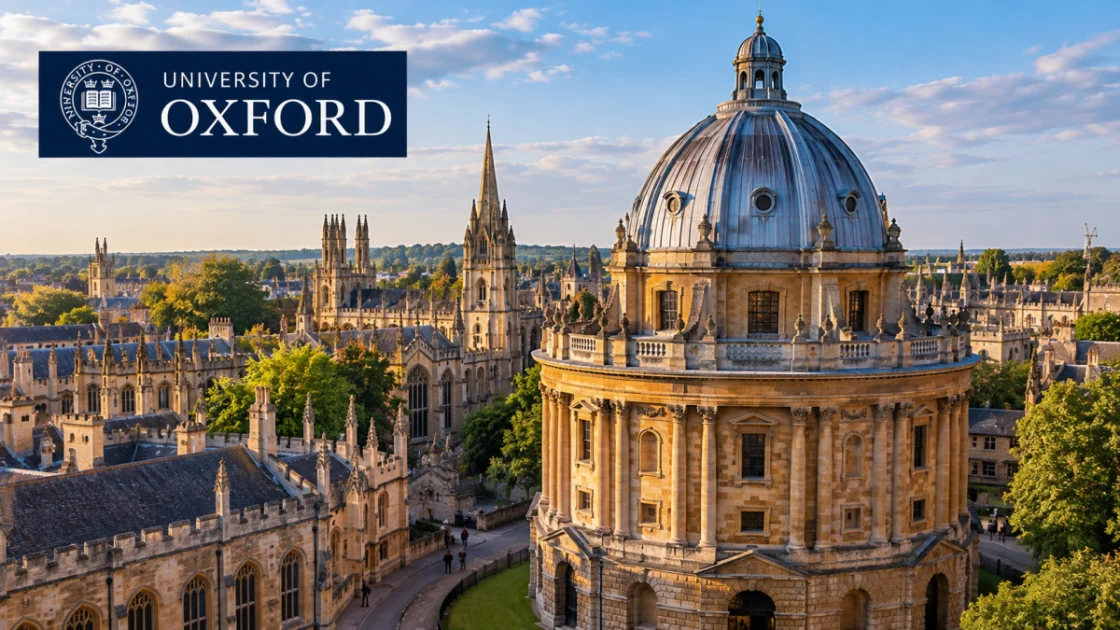
Featured image | Generic, licensed photograph of Oxford University architecture or a university library |
Featured image alt | Historic Oxford university buildings representing postgraduate study and Clarendon scholarship funding |
Image sourcing note: Use a properly licensed photograph from Unsplash or another image provider with clear reuse terms. Search for “Oxford University historic college architecture” or “Oxford university library exterior”. Do not download or reuse images from the official scholarship website without checking the applicable rights and permissions. Do not use an unofficial crest or logo that could imply endorsement.
Tab 6: FAQs
1. What is the Clarendon Scholarship deadline for Pakistani students applying for 2027–2028?
There is no single deadline that applies to every Clarendon applicant. Pakistani students must submit their Oxford graduate application by the funding deadline for their selected course, which falls in the relevant December or January deadline round. As of 15 October 2026, the general Clarendon guidance does not establish one exact date for all 2027–2028 courses. Check the official Oxford course page and confirm the deadline displayed in the application system. Enter the exact date and time in your personal calendar. Missing the funding deadline can remove your eligibility for automatic Clarendon consideration, even if the course accepts applications later for other purposes.
2. Can Pakistani students apply if they have no work experience?
Yes, provided they meet the entry requirements for their chosen Oxford course. Clarendon does not publish a universal minimum work-experience requirement. Selection focuses on academic achievement and potential, motivation, and evidence that the candidate is suited to the proposed programme. Some professional or specialist courses may have their own work-experience requirements, so the course page takes priority. A recent graduate should not rule themselves out merely because they have not held a full-time job. Instead, they should demonstrate academic preparation, relevant research or project experience, and a clear rationale for the chosen course wherever the application requests this evidence.
3. Do Pakistani applicants need IELTS or TOEFL for Clarendon?
Clarendon does not set one universal IELTS or TOEFL score for all applicants. English-language requirements are determined by the University of Oxford and the chosen course. Some applicants may qualify for an exemption under Oxford’s published rules, while others must provide an approved test result by the applicable deadline or offer-condition date. Do not rely on a general claim that every Pakistani applicant needs a particular band score, and do not assume that studying in English automatically guarantees an exemption. Check the course’s language requirements and Oxford’s official English-language guidance before paying for a test.
4. How much money does the Clarendon Scholarship provide?
Clarendon covers course fees for the award’s specified period of fee liability. Full-time scholars also receive an annual living grant. Oxford published a minimum annual living grant of £20,780 GBP for 2025–2026; this is not a confirmed figure for the 2027–2028 cohort. Part-time scholars receive a study-support grant whose amount varies according to the course and funding terms. Your total package depends on the tuition fees for your programme, the applicable grant rate and the award duration. Review the official funding page and your award letter before preparing a budget. Do not treat travel, visa or family expenses as covered unless your specific funding terms confirm them.
5. Can I bring my spouse or family to the United Kingdom?
Clarendon’s general scholarship description does not establish a universal additional family allowance. The scholarship’s living grant is intended to contribute to the scholar’s living expenses, and Oxford’s published description says it is normally sufficient for a single student living in Oxford. Bringing a spouse or children may increase accommodation, food, transport and immigration costs. Check the applicable UK Student visa rules for dependants, because eligibility depends on the course and immigration rules rather than Clarendon alone. Before accepting an offer, calculate the extra costs and confirm whether you have savings or other support to cover them. Do not assume the scholarship will increase automatically for dependants.
6. What if I receive an Oxford admission offer but no Clarendon Scholarship?
Admission to Oxford does not guarantee Clarendon funding. The scholarship is competitive, and only selected candidates receive an award. Oxford says unsuccessful Clarendon applicants may not be contacted individually; if you have not heard by mid-June, its general guidance says you should assume that you have not received the scholarship. Check the latest official guidance before relying on that timing for your particular cycle. If you receive an admission offer without funding, review other Oxford scholarships, external funding options and the financial conditions of your offer. Do not accept an unfunded place on the assumption that Clarendon funding will arrive later.
7. Can I apply if I have already studied in the United Kingdom or at Oxford?
Previous study in the United Kingdom is not, by itself, a general nationality or residence exclusion for Clarendon. Oxford states that applicants seeking to start a new eligible Master’s or DPhil course can be considered, including someone currently studying a Master’s at Oxford who is applying for a DPhil or another Master’s. However, applicants who hold a deferred graduate offer are not eligible under the published general rules, and students continuing the same Oxford degree are not eligible for a new award for that continuing course. Check your exact situation against the official Clarendon guidance before submitting your application.
8. Is there a Clarendon interview in Islamabad for Pakistani applicants?
The general Clarendon guidance does not establish a mandatory Pakistan-wide scholarship interview at a particular venue such as Islamabad. Oxford departments assess graduate applications, and academic divisions review nominations for Clarendon funding. The process and assessment criteria may differ by subject and by whether the course is taught or research-based. Some academic departments may interview applicants for admission, but this should not be confused with a universal Clarendon interview requirement. Follow communications from your department and Oxford Graduate Admissions, and do not book travel for an interview unless Oxford has explicitly invited you and provided the necessary details.
Clarendon Scholarship 2027–2028: a practical application guide for Pakistani students
The University of Oxford reported more than 230 new Clarendon scholarships for the 2025–2026 academic year. That figure gives a sense of the programme’s scale, but it should not be mistaken for a promised number of awards for 2027–2028. Clarendon is a competitive funding scheme for graduate students, and the important detail for applicants is how selection works: there is no separate Clarendon scholarship form. You apply for an eligible Oxford Master’s or DPhil course by its relevant funding deadline, and your application is considered automatically for Clarendon.
For Pakistani students, this means the quality and timing of the Oxford application matter from the beginning. A strong academic record is important, but it must be accompanied by a suitable course choice, clear motivation, complete documents and references that arrive on time. You also need a realistic financial plan in case you receive admission without a scholarship.
This guide explains how to check eligibility, identify your deadline, prepare a competitive application and understand the selection process. For the scholarship’s core funding facts, use the Clarendon Fund scholarship listing. Always verify time-sensitive details on the official Clarendon applicant information page.
Before you start — eligibility reality check
The first task is to confirm that your intended degree is eligible. Clarendon covers eligible full-time and part-time Master’s and DPhil courses at Oxford, across subject areas. Pakistani nationality does not disqualify you: Oxford explicitly states that there are no restrictions based on nationality or ordinary residence. This is an important distinction because some international scholarships restrict eligibility by citizenship, residence or a defined list of countries. Clarendon does not apply that general nationality restriction.
However, being eligible for Clarendon does not mean you automatically meet Oxford’s admission requirements. The department must still assess your academic background and suitability for the course. Start with the official Oxford graduate course directory. Open the page for the exact degree you want, then review its required qualifications, supporting documents, language requirements and deadline.
Check your academic qualifications carefully
Pakistani applicants may have a bachelor’s degree, a four-year BS, a master’s degree or another relevant qualification. Whether that qualification meets Oxford’s standard depends on the course and the awarding institution. Do not rely on a general online GPA-conversion chart to decide that you qualify. Oxford publishes country-specific guidance on international qualifications, and each course can set its own academic requirements.
Clarendon’s general guidance says that most successful scholars typically have an academic record equivalent to a first-class honours degree or better. That is a description of successful candidates, not a published universal CGPA threshold. If your transcript uses percentages, CGPA or a division classification, submit the official academic record and check Oxford’s published equivalency guidance rather than inventing a conversion.
Work experience is not a universal requirement
Clarendon itself does not require every applicant to have a fixed number of years of employment. Some courses, especially professional programmes, may require relevant work experience. Others place more emphasis on academic preparation, research potential or previous subject knowledge. Check the exact course page before deciding whether a gap in employment or a lack of professional experience is a problem.
Confirm your language-test position
Do not assume that every Pakistani applicant must take IELTS or TOEFL, and do not assume that every Pakistani applicant is exempt. Oxford’s English-language rules and the requirements of your course determine what evidence you need. Check the official course page and the University’s language guidance before booking a test. If you need a score, make sure you can obtain an accepted result by the deadline or offer-condition date that applies to you.
Finally, check the exclusion rules. Applicants holding deferred graduate offers are not eligible under Clarendon’s published general criteria, and students continuing the same Oxford degree are not eligible for a new award for that continuing course. If you are already studying at Oxford and want to move to another degree, read the official guidance carefully to determine whether your intended new course qualifies.
The 2027–2028 application timeline
Clarendon does not operate with one universal deadline. Oxford considers applicants who submit their graduate application by the relevant December or January funding deadline for the selected course. The exact date is course-specific, so the correct deadline for a DPhil in one department may not be the same as the deadline for a taught Master’s in another. As of 15 October 2026, do not enter a guessed universal date in your calendar or on a scholarship listing.
Use this sequence to organise your application:
Start with the course page. Identify the programme and record the deadline stated by Oxford.
Work backwards from that date. Set internal deadlines for your statement, transcripts, research proposal and references.
Submit the full application on time. Do not confuse a later admissions deadline with the deadline for funding consideration.
Monitor admission decisions. Oxford says graduate applicants usually receive a decision around 8–10 weeks after the application deadline, although timings vary.
Watch for funding updates. Clarendon nominations are reviewed by academic divisions, generally in February or March.
Check your email through the spring and early summer. Oxford says most initial Clarendon offers are normally sent by the end of April. Its general guidance says applicants who have not heard by mid-June should assume they were not awarded Clarendon funding.
Oxford University
Convert the deadline to Pakistan time
The course page or application system should be your authority for the exact deadline and time zone. If Oxford gives a deadline in UK local time, convert it to Pakistan Standard Time before setting your final reminder. Pakistan uses UTC+5 year-round, while the United Kingdom changes between GMT and British Summer Time. The difference therefore depends on the date.
For example, a deadline stated at 12:00 noon UK time would be 17:00 Pakistan time when the UK is on GMT, but 16:00 Pakistan time when the UK is on British Summer Time. This is an illustration of the time-zone difference, not an official Clarendon deadline. Use a reliable time-zone converter once the exact course deadline is known, and aim to submit at least a day early. Do not wait until the final hour to upload documents or resolve payment and reference issues.
Build your Oxford application around the course
The most useful way to prepare for Clarendon is to treat your Oxford application as the main scholarship application. Since there is no separate Clarendon form, you cannot compensate for a weak graduate application by writing an additional scholarship essay later. Your application needs to show both that you meet the course’s requirements and that you have the academic ability and potential expected of a Clarendon scholar.
Choose a course for academic fit, not only for the scholarship
Start by asking what you want to study and why Oxford is an appropriate place to study it. Compare the course structure, modules, research groups, faculty interests and expected outcomes. If you are applying for a research degree, identify how your proposed topic relates to the department’s expertise. If you are applying for a taught Master’s, explain how the programme builds on your previous education and supports a clear academic or professional direction.
Avoid applying to a course only because you have heard it is funded. Clarendon is available across subject areas, but admission requirements and competition differ by programme. The strongest strategy is to select a course that genuinely matches your academic record, interests and goals.
Write a specific personal statement
Where your course requires a personal statement, make each section answer a clear question:
Academic preparation: Which subjects, projects, dissertations or research tasks prepared you for this programme?
Course fit: Why does this particular Oxford course suit your interests better than a generic degree in the same field?
Future direction: What question or problem do you want to investigate, and how will the degree help you do that?
Evidence of potential: What have you already done that demonstrates the skills or curiosity needed for graduate study?
Pakistani applicants sometimes spend too much space describing how difficult it is to access funding or how much studying abroad would change their lives. Personal context can matter, but the statement should still establish academic fit and evidence of potential. Give concrete examples rather than relying on broad claims about passion or ambition.
Prepare a research proposal if required
For a research degree, the proposal should identify the problem, explain why it matters, summarise relevant scholarship and outline how you might investigate it. Be realistic about scope. A proposal that tries to answer an enormous question in a short research period may look less prepared than a focused question with a workable method.
Ask an academic mentor or supervisor in Pakistan to review the proposal for clarity and feasibility. If your topic involves a local institution, community or dataset, explain how you can access the evidence and address any ethical considerations. Do not claim that an Oxford academic has agreed to supervise you unless that person has actually confirmed it.
Treat references as a planned task
Choose referees who can comment on your academic ability and readiness for the proposed course. A lecturer who supervised your dissertation may be able to give more specific evidence than someone who knows you only through a large lecture. Provide referees with your CV, draft statement, course details and the submission deadline.
Check that each referee understands how to submit their reference through Oxford’s system. A reference that arrives after the deadline can create problems even if the rest of your application is ready. Do not wait until the last few days to ask someone to write it.
Build a complete document checklist
Use the course page to identify every required item. Depending on the programme, Oxford may request academic transcripts, degree certificates, references, written work, a personal statement, a research proposal, a CV or evidence of English-language proficiency. Not every course requires every item.
If your documents are in a language other than English, follow Oxford’s instructions for translations and certified copies. Do not pay for unnecessary attestation merely because a scholarship blog suggests it. For Pakistani qualifications, follow the University’s instructions and any later requirements that apply to your enrolment or visa process.
The Clarendon selection process
Clarendon is linked to Oxford’s graduate admissions process. The academic department considers the course application and determines admission. In parallel, academic staff may identify candidates for Clarendon nomination based on academic merit and future potential. Academic divisions then review nominations and allocate funding. The precise internal process can vary by division and subject.
This means you should not expect a separate Clarendon interview for every applicant. Some Oxford departments may interview applicants as part of graduate admissions, but that is not the same as a universal scholarship interview. Follow the instructions from your department and applicant account. If Oxford invites you to an interview, read the invitation carefully to confirm whether it is online or in person, what preparation is required and whether any travel arrangements are your responsibility.
How to prepare if your department invites you to interview
Review the course and your application before the interview. Be ready to explain why you selected the programme, what academic questions interest you and how your previous work prepared you for graduate-level study. For research courses, revisit your proposal and consider its assumptions, methods, limitations and feasibility. You may be asked to clarify your thinking rather than provide a memorised answer.
Use examples from your own experience. If you discuss a project, explain what you personally contributed and what you learned. If you do not know the answer to a question, acknowledge the gap and explain how you would investigate it. A thoughtful response is more useful than pretending to know everything.
Do not prepare for a supposed “Clarendon panel in Islamabad” unless you have received an official invitation confirming that arrangement. The general Clarendon guidance does not establish a universal Pakistan-specific interview venue. The department’s official communication is the source to follow.
What happens after selection?
Successful candidates are contacted by email and receive funding information. Oxford’s guidance explains that funding packages can be finalised over time, particularly where partnership awards are involved. Read the offer carefully and confirm the duration of the award, tuition coverage, living grant and any conditions attached to the funding. Do not make financial commitments based only on an informal message or an outdated stipend figure.
If you receive admission without Clarendon funding, assess the cost of the course before accepting. Oxford admission and scholarship selection are separate outcomes, and funding is not guaranteed simply because you qualify for consideration.
Common mistakes that weaken Pakistani applications
Assuming there is one scholarship deadline. Clarendon uses the relevant December or January funding deadline for the selected course. Verify the exact date on the official course page.
Treating Pakistani eligibility as a guarantee of funding. Pakistanis may apply, but selection is competitive and based on academic merit and potential.
Choosing a course without checking its entry requirements. A scholarship’s broad eligibility does not override the department’s requirements for your qualification or experience.
Waiting too long for references. Referees need time to prepare and submit their recommendations. Start this process well before the deadline.
Using a generic personal statement. A statement should demonstrate fit with the actual course and explain your academic direction with evidence.
Assuming every Pakistani applicant must take IELTS or TOEFL. Language requirements depend on Oxford’s rules and the chosen programme. Verify them instead of relying on blanket claims.
Budgeting with an outdated stipend. Oxford’s published £20,780 GBP minimum living grant applies to 2025–2026. Do not assume that amount will remain unchanged for 2027–2028.
What if you do not get the Clarendon Scholarship?
Clarendon is not the only funding route available to Pakistani students, but alternative awards have different eligibility rules and deadlines. Consider the following options and verify each one independently:
Oxford graduate scholarships: Search the official Oxford funding directory. Different awards may be restricted by course, college, academic background, country of residence or other criteria.
Chevening Scholarships: Check the official Chevening website for country-specific eligibility, participating courses and current-cycle requirements. Do not assume that a Chevening award can be combined with every Oxford funding package.
Commonwealth Scholarships: Review the Commonwealth Scholarship Commission website and the relevant programme rules. Eligibility and participating courses differ by scheme.
DAAD scholarships: If your study plans also include Germany, use the official DAAD scholarship database to search by qualification, subject and country.
University-specific awards elsewhere in the UK: Check the official funding pages of each university you are considering. Some awards require separate applications or have earlier deadlines than course admission.
These alternatives are not interchangeable, and some may not suit your intended degree or timeline. Before applying, verify the award’s country rules, academic level, funding coverage and current deadline. ScholarshipLedger should link to a separate, verified listing for each alternative rather than suggesting that every reader qualifies.
Next steps
Start with 4 practical actions today:
Open the Oxford graduate course directory and shortlist courses that fit your qualifications.
Record the exact funding deadline from each course page, including the stated time and timezone.
Build a document checklist and contact your referees early.
Read the official Clarendon applicant guidance, then compare your application plan with the Clarendon scholarship listing on ScholarshipLedger.
Subscribe to ScholarshipLedger’s scholarship updates if you want a reminder to revisit the listing when Oxford confirms or updates the next cycle’s funding information. The official University of Oxford pages remain the final authority for eligibility, deadlines and award terms.
PART 3 — Post-publish checklist
Confirm the scholarship listing slug is
clarendon-fund-scholarship-2027-uk.Confirm the blog slug is
clarendon-scholarship-pakistan-application-guide.Keep both records in Draft until all course-specific and cycle-specific details are reviewed.
Ensure the listing does not display a fabricated universal deadline.
Ensure the deadline meter does not count down to a guessed date.
Confirm the meta title and description render correctly and meet their character limits.
Confirm all FAQs render as accessible accordion items.
Verify the quick facts sidebar shows Master’s and DPhil levels, Oxford as provider and Pakistan eligibility.
Confirm the apply button opens the official Clarendon applicant guidance in a new tab.
Check that the application URL is clearly described as guidance to the Oxford graduate application process, not a separate Clarendon application form.
Verify JSON-LD schema is present and uses the correct scholarship information.
Confirm the blog links to the scholarship listing and the listing links back to the blog.
Test the featured image on mobile and desktop.
Check image licensing and avoid unofficial university crests or logos that imply endorsement.
Confirm that all internal links resolve to existing pages or are labelled as planned listings.
Test external links to Oxford, Chevening, Commonwealth and DAAD.
Confirm the living grant is labelled with its applicable academic year.
Check that the 2025–2026 living grant is not presented as the confirmed 2027–2028 amount.
Check that the blog’s word count is between 1,500 and 2,500 words.
Recheck official Oxford guidance before changing the listing to Published.
Confirm that no separate Clarendon form, guaranteed award or universal Pakistan interview venue is incorrectly claimed.
PART 4 — Verification reminders
The following are editorial reminders, not official scholarship deadlines.
Reminder | Date | Action |
|---|---|---|
Initial cycle review | 15 October 2026 | Check the Clarendon applicant page and identify the exact funding deadline for each featured Oxford course |
Course deadline verification | Before publishing each course-specific deadline | Confirm the exact date, time and timezone on the official course page |
Pre-deadline review | 14 days before each verified course deadline | Recheck eligibility, document requirements, funding deadline and application links |
Final deadline review | 3 days before each verified course deadline | Confirm the application system’s deadline and ensure the listing does not show an outdated date |
Funding process review | 1 March 2027 | Revisit official guidance on divisional nomination and selection |
Offer timeline review | 30 April 2027 | Check Oxford’s published guidance for updates to the Clarendon offer timeline |
Post-selection status review | 16 June 2027 | Review the listing status and clarify that funding decisions may not be communicated individually to unsuccessful candidates |
Next-cycle duplication | 1 October 2027 | Create a draft for the following entry cycle if Oxford has published enough verified information |
Funding amount review | When Oxford publishes a new rate | Update the stipend field and all references to the previous annual grant |
If Oxford announces different dates or changes its funding process, update the schedule to match the official information.
PART 5 — Sources cited
Access date: 15 October 2026.
Primary sources — official
1. Clarendon Fund — information for applicants https://www.ox.ac.uk/admissions/graduate/fees-and-funding/funding/clarendon/applicants Used for eligibility, fee coverage, living grants, duration, application process and selection timeline.
2. About the Clarendon Fund https://www.ox.ac.uk/admissions/graduate/fees-and-funding/funding/clarendon/about Used for programme background, the number of awards reported for 2025–2026 and general funding context.
3. Clarendon Fund overview https://www.ox.ac.uk/admissions/graduate/fees-and-funding/funding/clarendon Used for the scheme’s general eligibility and automatic-consideration process.
4. Oxford standard scholarship selection terms https://www.ox.ac.uk/admissions/graduate/fees-and-funding/fees-funding-and-scholarship-search/standard-scholarship-selection-terms Used to check general rules for automatic consideration and scholarship selection.
5. Oxford graduate application decision timeline https://www.ox.ac.uk/admissions/graduate/after-you-apply/decision-timeline Used for general graduate admission decision timings and scholarship notification context.
6. Oxford graduate course directory https://www.ox.ac.uk/admissions/graduate/courses Used as the official starting point for finding individual course requirements and deadlines.
7. Oxford graduate funding guidance https://www.ox.ac.uk/admissions/graduate/fees-and-funding/funding Used for the general funding application process and related scholarship information.
8. Oxford English-language requirements and graduate application guidance https://www.ox.ac.uk/admissions/graduate/application-guide/qualifications-experience-languages-funding Verify the applicable course-specific language and qualification requirements before publishing any numerical test threshold.
Secondary sources — cross-reference
1. Titans Abroad — Clarendon Fund Scholarship guide https://titansabroad.org/blog/clarendon-fund-scholarship-oxford-complete-guide Used only as a secondary cross-check of the automatic-consideration process. The official Oxford guidance takes precedence.
Titans Abroad
2. LearnViaHub — how to apply for Clarendon https://www.learnviahub.com/how-to-apply-clarendon-scholarship/ Used as a secondary cross-check for the application workflow and document-preparation topics. Verify all deadlines, eligibility and funding figures against Oxford.
Oxford Guide
3. StepOut Travel — Clarendon Scholarship 2027 guide https://stepouttravel.com/clarendon-scholarship-2027/ Used as a secondary cross-check of the course-specific deadline principle and the absence of a separate Clarendon form.
StepOut Travel
Pakistan-specific coverage
No independent Pakistan-specific news article was used to establish eligibility or deadline information. The University of Oxford’s official policy confirms that there are no restrictions based on nationality or ordinary residence, so Pakistani applicants are eligible to be considered.
Oxford University
Final verification notes
Pakistani eligibility is confirmed through the official Oxford Clarendon guidance.
Clarendon consideration is automatic for eligible applicants who meet the relevant course funding deadline.
The exact deadline varies by course. A universal 2027–2028 deadline is not verified and must not be invented.
The minimum annual full-time living grant of £20,780 GBP applies to the published 2025–2026 figure. The amount for 2027–2028 must be verified before publication.
Oxford does not publish a universal numerical GPA threshold, IELTS/TOEFL score, work-experience minimum or Pakistan-specific interview location for Clarendon.
The award is competitive, and admission to Oxford does not guarantee Clarendon funding.
All course-specific requirements, dates and funding terms should be rechecked against official Oxford sources before the listing is published.